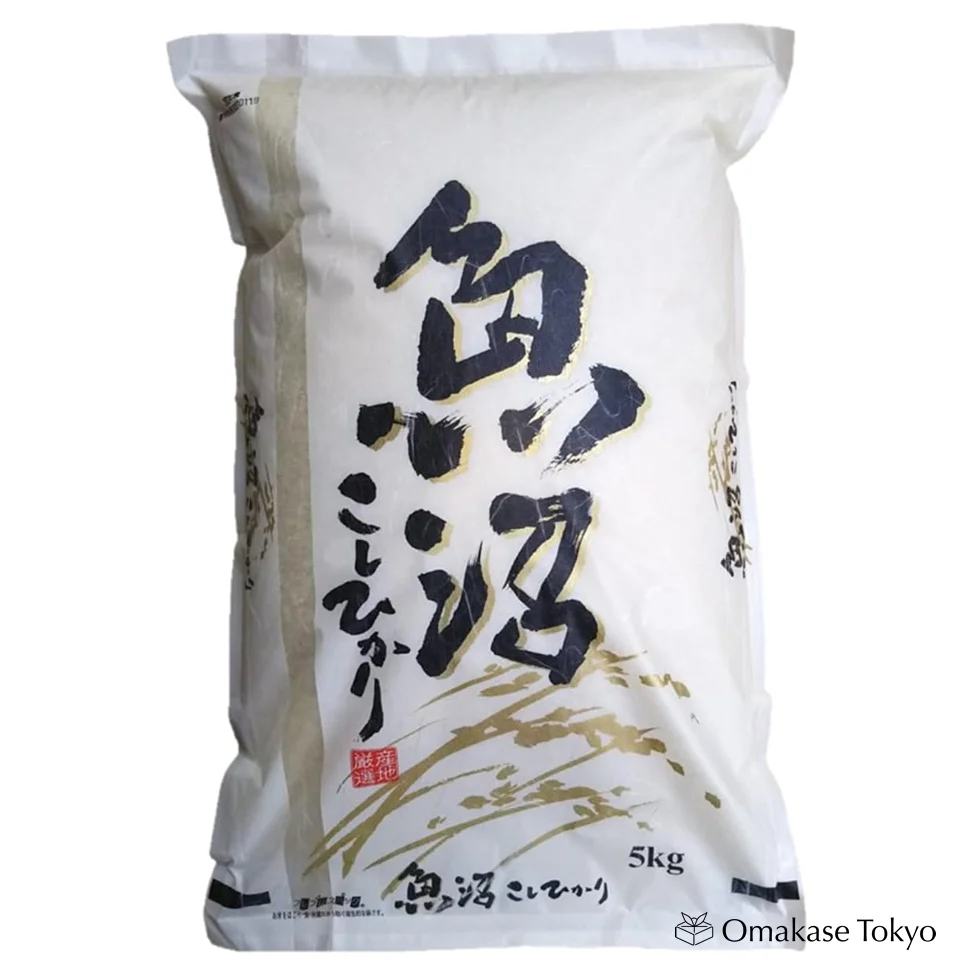
Koshihikari from Niigata 2kg
Embark on a Journey of Flavor with Japanese Rice
Japanese rice, revered for its aromatic fragrance, exquisite taste, and superior stickiness, stands as a testament to the country's rich agricultural heritage. Born from the finest terroir that Japan has to offer, each grain of rice embodies a level of quality and craftsmanship that is unmatched.
The Influence of Pristine Waters
One of the key factors contributing to the exceptional quality of Japanese rice is the water it is grown with. Sourced from the pristine waters of the Echigo Three Mountains—Mount Hakkai, Mount Nakadake, and Mount Komagatake—the snowmelt water is rich in minerals. Even during the sweltering heat of summer, this water helps regulate soil temperature, providing vital energy to the rice roots and ensuring their vigor.
Soil Composition and Flavor Concentration
The soil composition further enhances the quality of Japanese rice. Spread across river terraces and alluvial fans, the lean soil suppresses excessive growth, allowing the rice to concentrate its flavor. This natural restraint results in rice grains that are not only delicious but also packed with flavor.
Climate's Role in Texture and Taste
The unique climate of mountainous regions plays a crucial role in shaping the taste and texture of Japanese rice. The significant temperature difference between day and night helps regulate the consumption of starches overnight, leading to rice grains with optimal texture and flavor. Additionally, the average temperature during the ripening period closely aligns with the ideal temperature for Koshihikari rice, known for its stickiness, resulting in rice with a lower amylose content and increased stickiness.
A Reflection of Tradition and Bounty
In conclusion, Japanese rice is not merely a staple food—it is a reflection of the land, water, and climate from which it originates. With its unparalleled aroma, taste, and texture, Japanese rice continues to captivate palates around the world, offering a glimpse into the rich agricultural traditions and natural bounty of Japan.
Original: $50.77
-65%$50.77
$17.77Product Information
Product Information
Shipping & Returns
Shipping & Returns
Description
Embark on a Journey of Flavor with Japanese Rice
Japanese rice, revered for its aromatic fragrance, exquisite taste, and superior stickiness, stands as a testament to the country's rich agricultural heritage. Born from the finest terroir that Japan has to offer, each grain of rice embodies a level of quality and craftsmanship that is unmatched.
The Influence of Pristine Waters
One of the key factors contributing to the exceptional quality of Japanese rice is the water it is grown with. Sourced from the pristine waters of the Echigo Three Mountains—Mount Hakkai, Mount Nakadake, and Mount Komagatake—the snowmelt water is rich in minerals. Even during the sweltering heat of summer, this water helps regulate soil temperature, providing vital energy to the rice roots and ensuring their vigor.
Soil Composition and Flavor Concentration
The soil composition further enhances the quality of Japanese rice. Spread across river terraces and alluvial fans, the lean soil suppresses excessive growth, allowing the rice to concentrate its flavor. This natural restraint results in rice grains that are not only delicious but also packed with flavor.
Climate's Role in Texture and Taste
The unique climate of mountainous regions plays a crucial role in shaping the taste and texture of Japanese rice. The significant temperature difference between day and night helps regulate the consumption of starches overnight, leading to rice grains with optimal texture and flavor. Additionally, the average temperature during the ripening period closely aligns with the ideal temperature for Koshihikari rice, known for its stickiness, resulting in rice with a lower amylose content and increased stickiness.
A Reflection of Tradition and Bounty
In conclusion, Japanese rice is not merely a staple food—it is a reflection of the land, water, and climate from which it originates. With its unparalleled aroma, taste, and texture, Japanese rice continues to captivate palates around the world, offering a glimpse into the rich agricultural traditions and natural bounty of Japan.